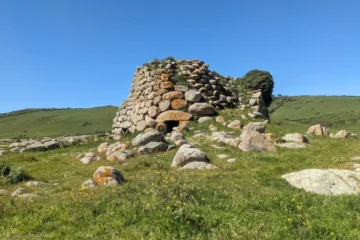
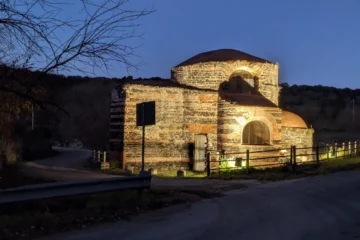
After some time, we return to Santa Maria Coghinas, a small village on the border between Anglona and Gallura, which we visited during our journey along the Coghinas River.
The village extends along the edge of the Valledoria plain, where the first hills rise. Strolling through the center of Santa Maria Coghinas, near the ancient Church of the Madonna delle Grazie, is like leafing through a book of harmoniously intertwined stories.

The Church of Our Lady of Grace: a timeless symbol
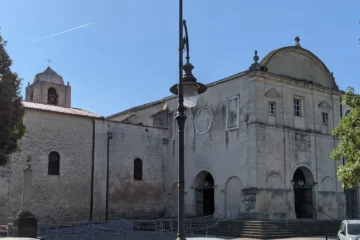
In the center of the village stands the Church of the Madonna delle Grazie, a building dating back to the Romanesque period that remains the heart of local devotion. The façade was remodeled in the Gothic style over the centuries, and the bell tower was also rebuilt at a later date.
The church is not only a place of worship, but also a focal point of local tradition; named after the town’s patron saint, it houses the statue of the Madonna that is carried in procession every year on May 1st.


The War Memorial: memories engraved in stone and iron
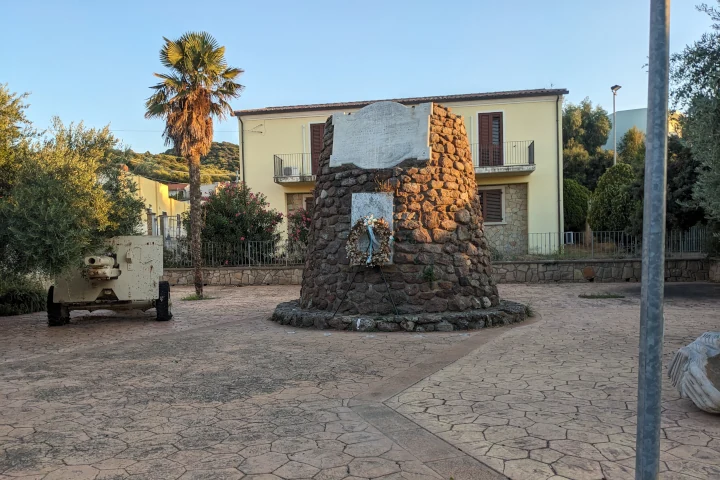
A few steps from the church, a square dedicated to the Fallen captures our attention; here we find a stone monument flanked by a cannon.
The words engraved on the monument are dedicated to the victims of the Great War, a tangible sign of the sacrifices and events that have marked the history of the country.

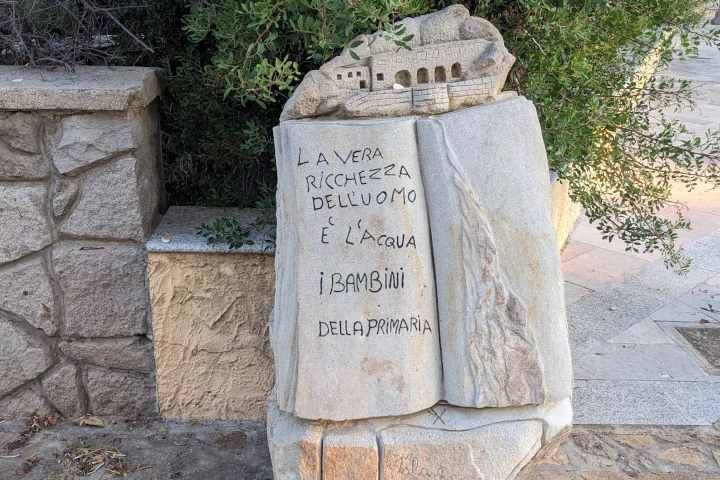
Continuing along the pedestrian path, we find a smaller sculpture dedicated to water, which echoes the sentiment of the young elementary school students: “Water is man’s wealth.” The source of inspiration is clearly the Coghinas River, a river of great importance to all the locals.
A small amphitheater for the community
A few meters further on, we find another important place… While the church and the war memorial speak of faith and memory, the small amphitheater-shaped square is the beating heart of social life. With its open and scenic layout, it hosts events, demonstrations, and performances during summer evenings and on special occasions.